

Welcome to the nucleolar Dynamic Research Team
After DNA damage is repaired, how does a cell fully recover its functions?
Our team investigates the molecular choreography that restores transcriptional activity and nuclear/nucleolar architecture.
Our Research
One of the most fascinating – and still relatively unexplored – aspects of DNA repair concerns how cells are able to fully restore their functions once DNA lesions have been removed and genomic integrity has been re-established.
DNA damage not only interferes with transcription, replication, and cell cycle progression, but can also disrupt nuclear architecture, altering chromatin domain positioning and nucleolar organization.
Our team focuses on the molecular mechanisms that allow cells to regain normal transcriptional activity after DNA repair. In particular, we study the reorganization of nucleolar structure, an essential yet poorly understood process.
Research Project
The nucleolus is a membrane-less nuclear compartment with a highly ordered internal organization, tightly linked to its main role in ribosome biogenesis. This includes the transcription of ribosomal DNA (rDNA) by RNA polymerase I (RNAP1) and the early maturation of ribosomal RNA.
This sophisticated organization can be severely disrupted by genotoxic agents or by general cellular stress. In recent years, our work has shown that following genotoxic stress such as ultraviolet (UV) irradiation, RNA polymerase I and ribosomal DNA are relocated to the nucleolar periphery. Remarkably, nucleolar architecture is only restored once all rDNA lesions – in both active and inactive regions – have been repaired.
Complete restoration of the nucleolus therefore depends not only on efficient DNA repair systems, but also on the action of key proteins. Among these, the SMN protein (Survival of Motor Neuron), which is defective in patients with spinal muscular atrophy (SMA), plays a central role. We have demonstrated that in the absence of SMN, RNA polymerase I remains trapped at the nucleolar periphery even after DNA damage repair is completed. Strikingly, SMN translocates from Cajal bodies (CBs) to the nucleolus immediately after repair, but before nucleolar structure is fully re-established.
Other proteins, such as fibrillarin (FBL), COILIN, and nuclear myosin 1 (NM1), also appear to be required for this process of reorganization.

Our objectives
Through our research, we aim to:
- Investigate the dynamic reorganization of nucleoli following genotoxic stress.
- Elucidate the mechanisms governing nucleolar homeostasis once DNA repair has been completed.
- Identify the critical factors involved in maintaining and restoring nucleolar integrity.

Discover our team
“At the heart of every scientific breakthrough lies not only rigorous research, but also the people who carry it out. I believe that great discoveries are born from harmony, trust, and the joy of working together”

Dr. Ambra Giglia Mari
Dr. Ambra Giglia-Mari is a DR1 CNRS Senior Researcher and Group Leader of the “Nu-DyRection” team (Nucleolar Dynamics after DNA Repair in Action) at the Institute of Pathophysiology and Genetics of Neuron and Muscle (INMG-PGNM) in Lyon.
Dr. Giglia-Mari has extensive expertise in DNA repair and transcription. During her PhD, she worked in Dr. A. Sarasin’s lab studying p53 mutagenesis in skin cancers from DNA repair-deficient Xeroderma Pigmentosum patients.
During her postdoctoral research in the renowned lab of Dr. Hoeijmakers, a leader in DNA repair, she focused on the basal transcription/repair factor TFIIH, discovering and characterizing its 10th subunit mutated in the Trichothiodystrophy group A syndrome. In this period, she also developed mouse models expressing fluorescently tagged DNA repair proteins and created in vivo assays using Fluorescence Recovery After Photobleaching (FRAP) to study DNA repair kinetics in post-mitotic cells and transcription dynamics in living tissues.
In 2009, she established her independent research group in France (ATIPE/CNRS), formulating the novel hypothesis that after DNA repair, cellular activities blocked by DNA damage are actively restored through proteins and molecular mechanisms yet to be fully characterized. To explore this field, she developed assays to investigate the recovery of RNA Polymerase II transcription.
More recently, her research has centered on RNA Polymerase I transcription in the nucleolus. She demonstrated that UV-induced lesions on ribosomal DNA undergo transcription-coupled nucleotide excision repair.
Significantly, DNA damage causes profound mislocalization of nucleolar proteins and DNA, and her group studies how the nucleolus regains its proper structure after repair completion. She identified critical proteins for nucleolar homeostasis, notably the Survival Motor Neuron (SMN) protein, which plays a pivotal role in nucleolar restoration post-DNA repair.
Currently, Dr. Giglia-Mari’s team is investigating SMN’s role in nucleolar dynamics and its implications for Spinal Muscular Atrophy (SMA) pathology.
This work contributes important insights into the interplay between DNA repair, transcriptional recovery, and cellular homeostasis.
Our last news
Discover our news.
-
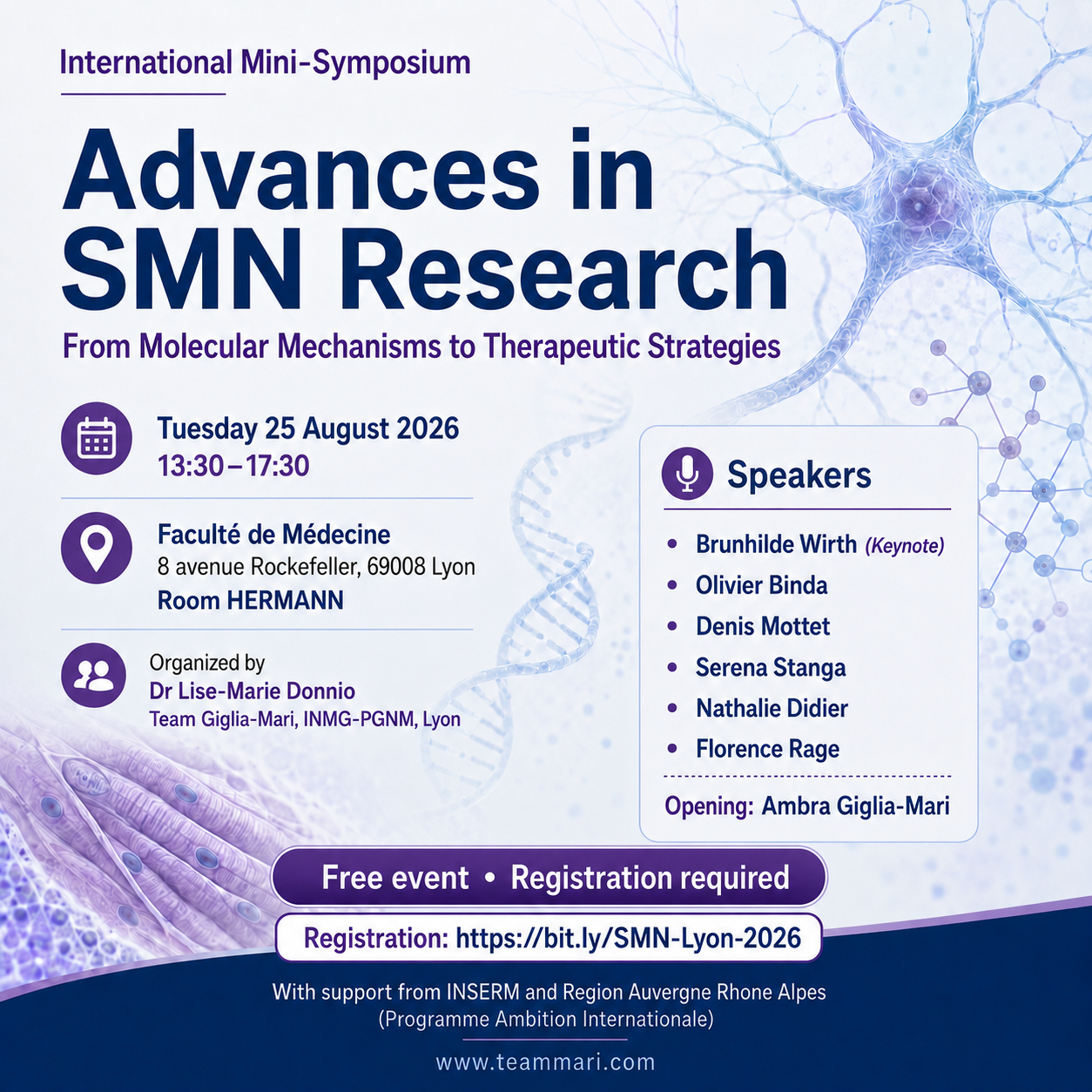
SYMPOSIUM on SMN
We are pleased to announce the upcoming international mini-symposium: Advances in SMN Research: From Molecular Mechanisms to Therapeutic Strategies 📅 Tuesday 25 August 2026🕐 13:30–17:30📍 Faculté de Médecine, Lyon — Room HERMANN This half-day scientific event will bring together researchers working on SMN biology, spinal muscular atrophy, disease models, RNA metabolism, neuromuscular dysfunction, and emerging therapeutic strategies. We are delighted…
-
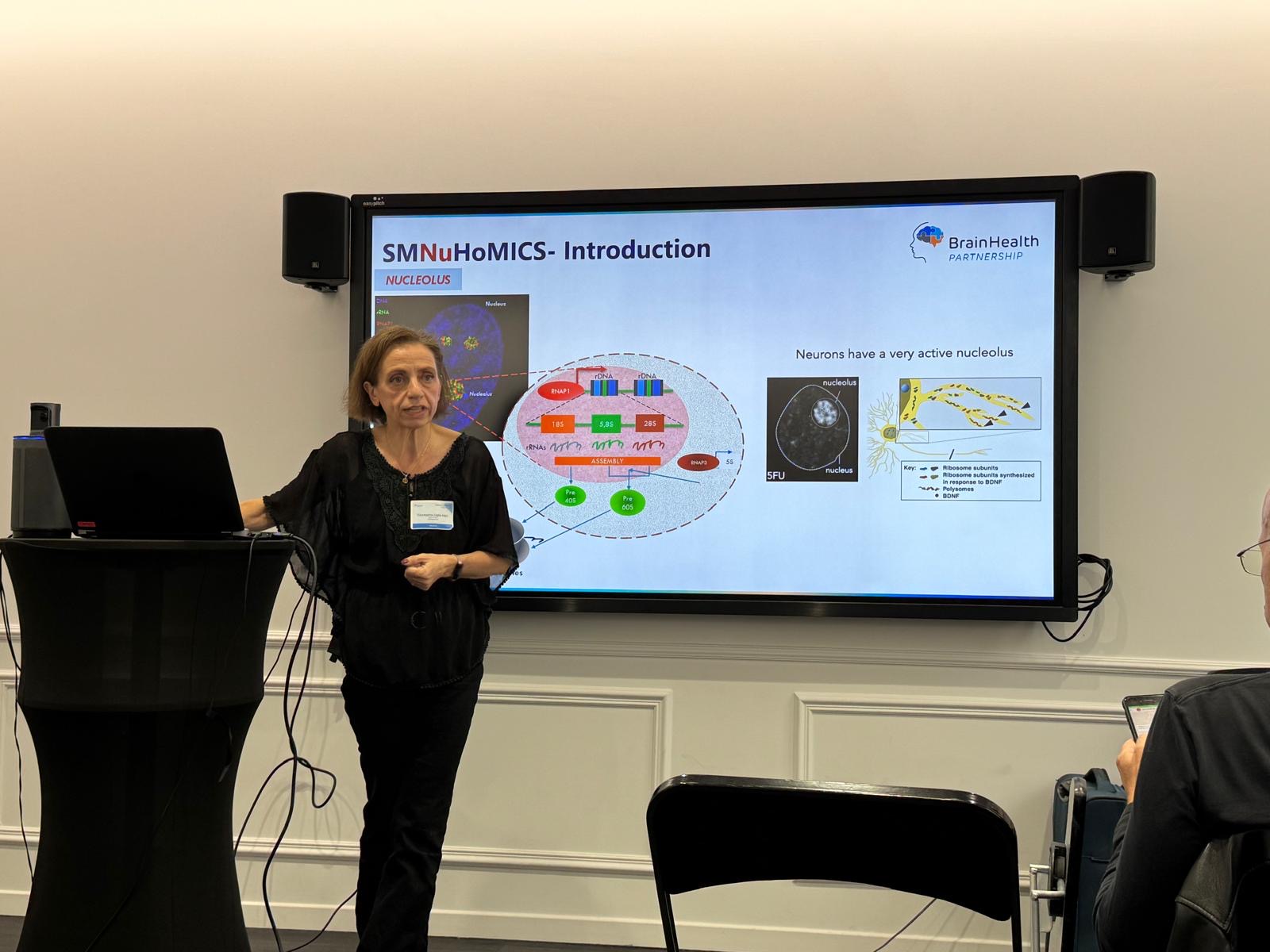
SMNuHoMICS at the JPND Symposium
It was a pleasure to present the progress of the SMNuHoMICS project at the NEURON & JPND – EU Joint Programme Neurodegenerative Disease Research / EP BrainHealth Midterm Symposium in Paris. The international consortium focuses on the role of SMN in nucleolar homeostasis and nuclear recovery after stress, with potential implications for spinal muscular atrophy…
-
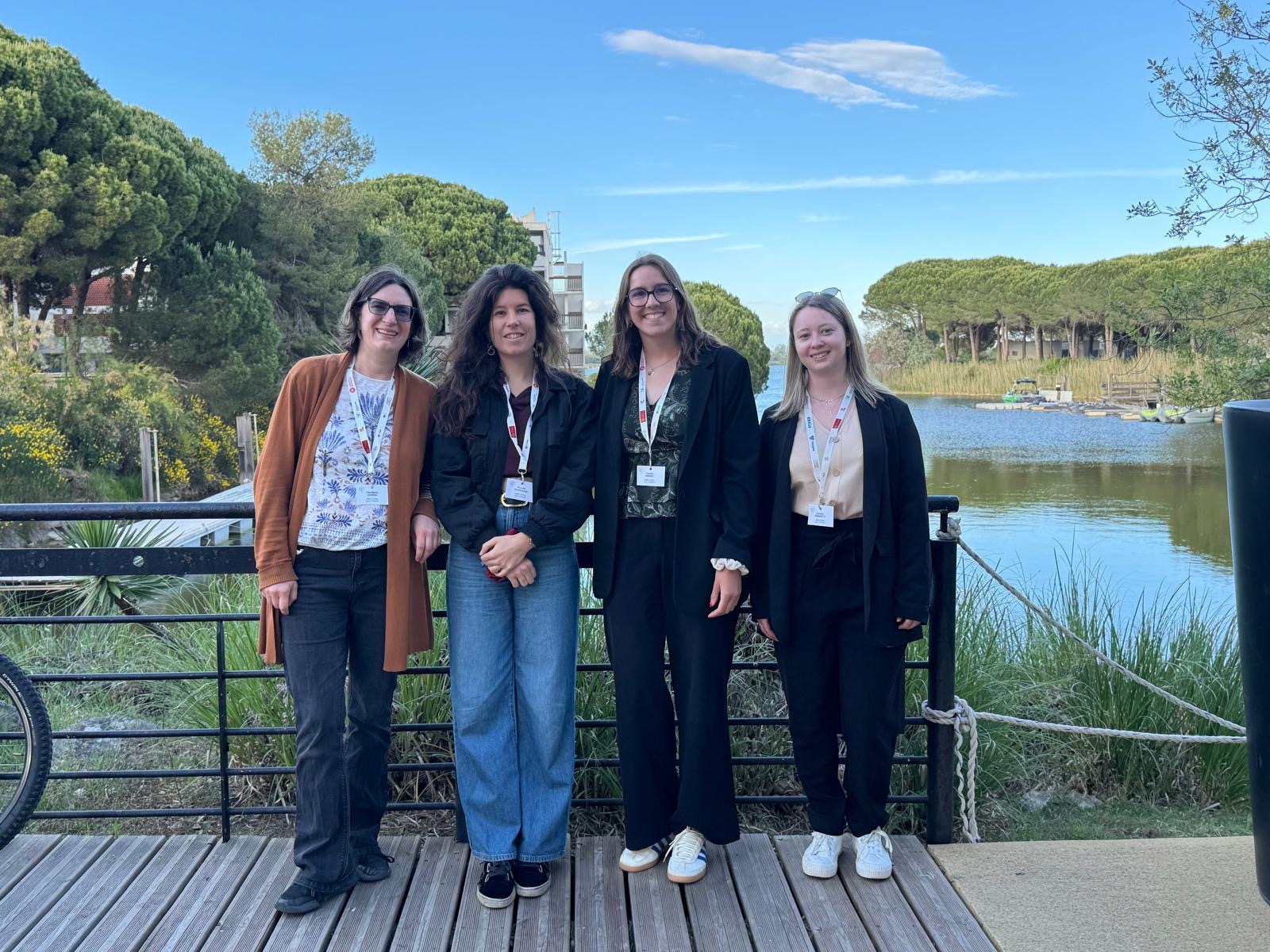
Looking back at the 3R Congress
— Replication, Recombination and Repair — held at Presqu’île du Ponant The TEAM MARI laboratory was strongly represented this year with several posters presented by our students and young researchers on DNA damage response, nucleolar reorganization, and the role of key proteins such as SMN, FUS and CHD2. 👏 Congratulations to:• Phoebe Rassinoux for her…
-
🔬 We Are Recruiting a Postdoctoral Fellow (MSCA-PF 2026)
We are seeking a highly motivated postdoctoral candidate to apply for the Marie Skłodowska-Curie Actions Postdoctoral Fellowships (MSCA-PF) 2026. 📅 Deadline: September 9th, 2026 🧬 Our Research Focus Our goal is to better understand Spinal Muscular Atrophy (SMA) by uncovering previously unexplored functions of the Survival Motor Neuron (SMN) protein. We aim to move beyond…


